
Static Transfer Switch
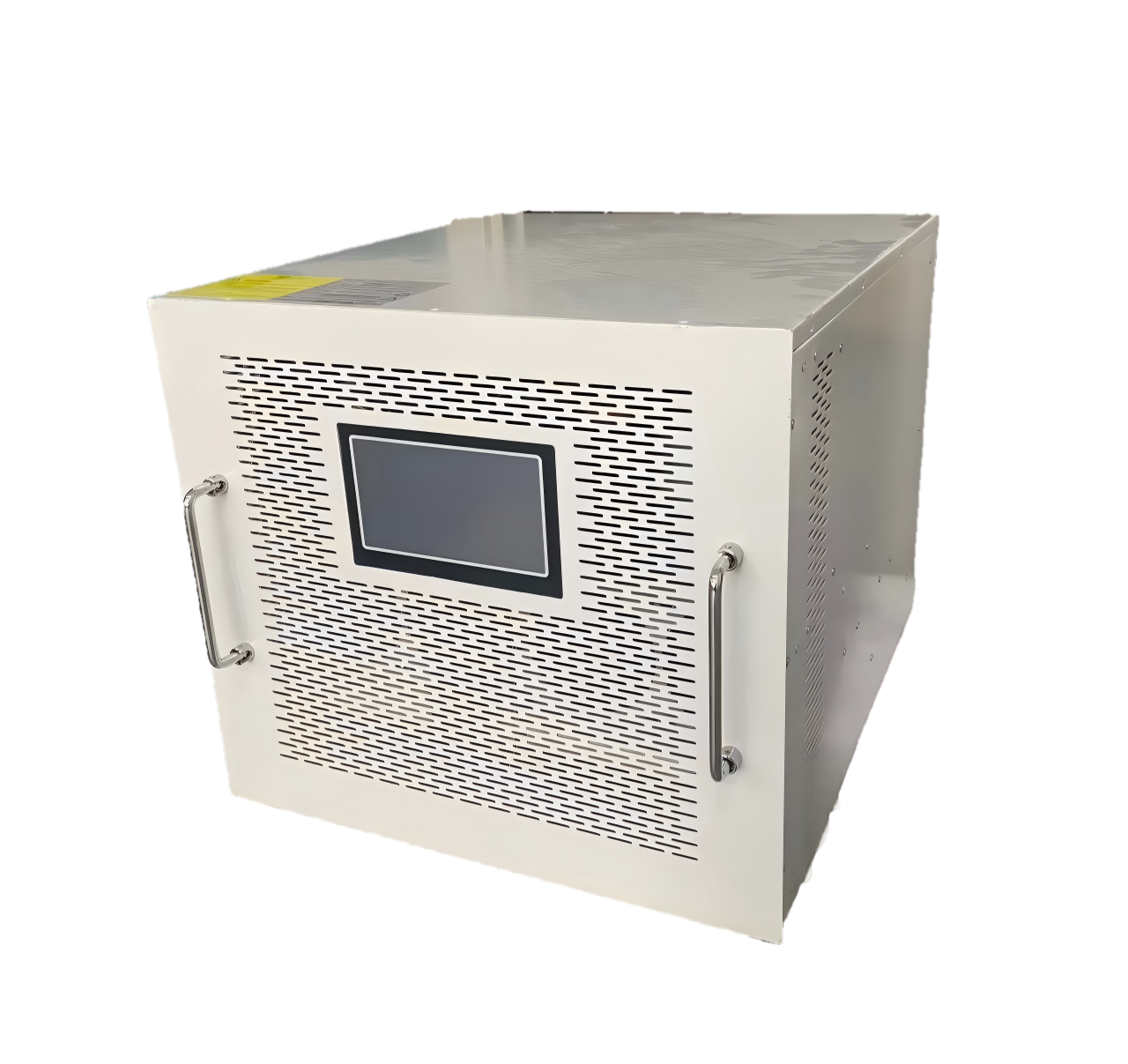
SW-STS guarantees a source of redundant power,allowing the load to be switched between to alternative and independent power sources. Switching can be automatic (when a supply source falls outside of acceptable tolerances) or manually done by an operator from the front panel or remotely.
Best suited for
- ● Banking, Financial and Insurance
- ● Data Center/Colocation/Hosting
- ● Education
- ● Government
- ● Healthcare
- ● Manufacturing
- ● Telecom
Performance Features
- ● Power blackout protection and power redundancy
- ● Automatic static switching
- ● Remote monitoring input power sources
- ● Easy static and mechanical transfer to input sources
- ● Remote management the power events
- ● Power event logging
- ● Output current capability up to 1000% for short time
- ● Manufactured according to EC Directive
performance advantages
1. Zero-Wear Electronic Switching (SCR-Based)
- No moving parts: Unlike mechanical ATS units, the SW-STS uses silicon-controlled rectifiers (SCRs) for switching, eliminating mechanical wear, friction, and contact degradation.
- MTBF > 1,000,000 hours: Proven in Tier IV data centers, offering decades of maintenance-free operation.
- 100% solid-state reliability: Ideal for mission-critical environments (hospitals, financial HFT systems, cloud infrastructure).
2. Sub-Cycle Transfer Speed with Phase-Lock Precision
- <4 ms synchronous transfer: Ensures zero perceptible interruption even for the most sensitive IT loads (e.g., servers with PLL-based PSUs).
- <10 ms non-synchronous: Adjustable delay and zero-current crossing modes prevent inrush currents during out-of-phase switching.
- Break-Before-Make topology: Guarantees galvanic isolation between sources, preventing cross-conduction.
3. Extreme Overload & Fault Resilience
- 1000% short-time current capability (250 ms @ >300% load): Handles massive inrush without tripping upstream breakers.
- Selective fault isolation: In case of downstream short circuit, blocks transfer and isolates fault within <1 ms, protecting other loads and maintaining upstream selectivity.
- Backfeed protection K1/K2 circuit: Automatically triggers upstream breakers if reverse power is detected, preventing energy feedback into utility or generator inputs.
4. Ultra-High Efficiency & Thermal Design
- >99% efficiency at full load: Minimal heat generation (<1% loss), reducing cooling costs in dense rack environments.
- Redundant forced-air cooling: Dual fans with failure alarm ensure continuous operation even if one fan fails.
- Low acoustic noise:
- <52 dBA (50–250A)
- <55 dBA (300–600A)
- <60 dBA (800–1250A) → Suitable for office-adjacent or colocation facilities.
5. Built-In Transient Voltage Surge Suppression (TVSS)
- Integrated surge protection on both inputs absorbs spikes, sags, and transients.
- User-configurable voltage/frequency windows allow tailored protection for regional grid variations.
6. Full Frontal Serviceability & Hot-Swap Design
- All connections and boards accessible from front: No rear access required — critical for wall-mounted or zero-U-space installations.
- Modular SCR and control board design: Enables live replacement without load interruption (in redundant dual-STS configurations).
- Cable entry from bottom: Simplifies installation in raised-floor data centers.
7. Advanced Digital Ecosystem Integration
- Standard RS232 + optional RS485/TCP/IP: Full Modbus/SNMP support for DCIM, BMS, and EPMS platforms.
- Dual serial ports + dry contact I/O: Enables alarm integration with fire panels, generators, and security systems.
- Event logging with timestamp: Stores >10,000 power events for forensic analysis and SLA compliance.
- Remote source monitoring: Real-time input voltage, current, frequency, and phase sync status via web interface.
8. Wide Environmental & Electrical Tolerance
- Input voltage range: 180–264 VAC (Ph-N) → Supports brownout conditions without transfer.
- Frequency tracking: 48–65 Hz (adjustable) → Compatible with generator drift and microgrid instability.
- Operating temperature: 0–40°C, <90% non-condensing → Reliable in non-climate-controlled edge sites.
9. Scalability & Configuration Flexibility
- 3-pole and 4-pole versions: 4-pole models switch neutral, preventing ground loops in IT loads with separate N-G bonding.
- Current range: 50A to 1250A: Covers edge computing to hyperscale data halls.
- Parallelable for redundancy: Two STS units can operate in active-active mode with load sharing and automatic failover.
10. Compliance & Future-Proof Design
- Certified to EN 62310-1 (Safety) & EN 62310-2 (EMC).
- RoHS and CE compliant.
- Designed for IEEE 519 harmonic compliance with <10% input THD.
| Model | 3-P50A | 3-P100A | 3-P150A | 3-P200A | 3-P250A | 3-P300A | 3-P400A | 3-P600A | 3-P800A | 3-P1000A | 3-P1250A | |
|---|---|---|---|---|---|---|---|---|---|---|---|---|
| 4-P50A | 4-P100A | 4-P150A | 4-P200A | 4-P250A | 4-P300A | 4-P400A | 4-P600A | 4-P800A | 4-P1000A | 4-P1250A | ||
| Nominal Current (A) | 50 | 100 | 150 | 200 | 250 | 300 | 400 | 600 | 800 | 1000 | 1250 | |
| Input Voltage (Ph-Ph) | 380/400/415VAC 3PH+N+Earth | |||||||||||
| Input Voltage Tolerance | 180-264VAC (PH+N) | |||||||||||
| Input Frequency | 50/60HZ | |||||||||||
| Input Frequency Range | 48-65Hz (upper and lower limits adjustable) | |||||||||||
| Efficiency (full load) | >99% | |||||||||||
| Input Voltage THD | <10% | |||||||||||
| Transfer Type | Break Before Make | |||||||||||
| Transfer Methods Available | Automatic/Manual/Remote | |||||||||||
| Transfer Control | Synchronous; With adjustable delay (non-synchronous); zero current (non-synchronous) | |||||||||||
| Transfer Time | <4msn for synchronoussources <10msn for non-synchronoussources | |||||||||||
| Switching Type | 3-Poles : 3 phase switching; 4-Poles : 3 phases + neutral switching | |||||||||||
| Crest Factor | 3:1 | |||||||||||
| Admissible Overload | 0-100% continuous; 101-150%, 1min 151-200%, 10sec; >300%, 250ms | |||||||||||
| Protections | Output overload, short circuit, over temperature, backfeed and SCR fault protection | |||||||||||
| LCD Panel and Mimic | Standard | |||||||||||
| Communication | RS232 standard, RS485 optional | |||||||||||
| TCP/IP Connection | optional | |||||||||||
| Serial Ports | 2; optional | |||||||||||
| Temperature Sensor | Standard for internal cabinet temperature | |||||||||||
| Environment | ||||||||||||
| Operating Temperature | 0°C - 40°C | |||||||||||
| Storage Temperature | (‘) -10°C - 50°C’ | |||||||||||
| Humidity | <90%(non condesing) | |||||||||||
| Cooling | Forced cooling (redundant fans) | |||||||||||
| Noise | <52dBA | <55dBA | <60dBA | |||||||||
| Safety Standard | EN62310-1 | |||||||||||
| EMC | EN62310-2 | |||||||||||
| Mechanica | ||||||||||||
| Dimension (W*D*H)(mm) | 700*1000*1500 | 700*1000*1700 | 1000*1200*1800 | |||||||||
| Weight (kg) | 3-Pole | 160 | 180 | 200 | 220 | 250 | 300 | 400 | 500 | 550 | 580 | |
| 4-Pole | 190 | 210 | 230 | 250 | 280 | 340 | 440 | 550 | 600 | 620 | 900 |
The warranty period and related after-sales service for SW STS are as follows:
Warranty Period : A three-year warranty is provided.
Extended Warranty Service : After the warranty period, customers can still enjoy comprehensive after-sales support, including maintenance and repair.
Nationwide Warranty : A nationwide warranty policy is implemented, allowing users to apply for service at the nearest service center in any region.
Additional Services : Inspection services are provided as needed, including equipment maintenance, repair, and problem solving.
I. The warranty policy for SW STS mainly includes the following terms :
1. Warranty Period :
The warranty period is three years from the date of purchase, covering normal use issues of the STS units.
2. Scope of Free Service :
Equipment failures caused by hardware malfunctions (such as circuit board damage) or manufacturing defects (such as assembly errors).
3. Exclusions :
Failures caused by human error (such as drops or liquid intrusion), unauthorized repairs, accidents (such as natural disasters), or the use of non-original parts are not covered by the warranty.
4. Warranty Process :
After disconnecting the power and unplugging the power cord, contact customer service with the model number, serial number, and a description of the malfunction.
Customer service will guide you through choosing between repair, replacement, or refund services. The specific processing time depends on the malfunction.
If repair is ineffective or the device needs replacement, a refund will be issued (the amount will be based on the purchase price).
5. Other Key Terms :
Technical Support Service: Nationwide warranty and comprehensive technical support are provided during the warranty period. Users can apply for service at the nearest service center in any region.
6. Post-Warranty Plan :
Free repair or replacement will no longer be provided, but paid maintenance services (such as inspections, battery replacements, and hardware/software upgrades) are supported.
It is recommended to perform annual maintenance (such as cleaning and dust removal, electrical connection checks, and battery performance testing) to prevent potential problems and extend the device’s lifespan.