
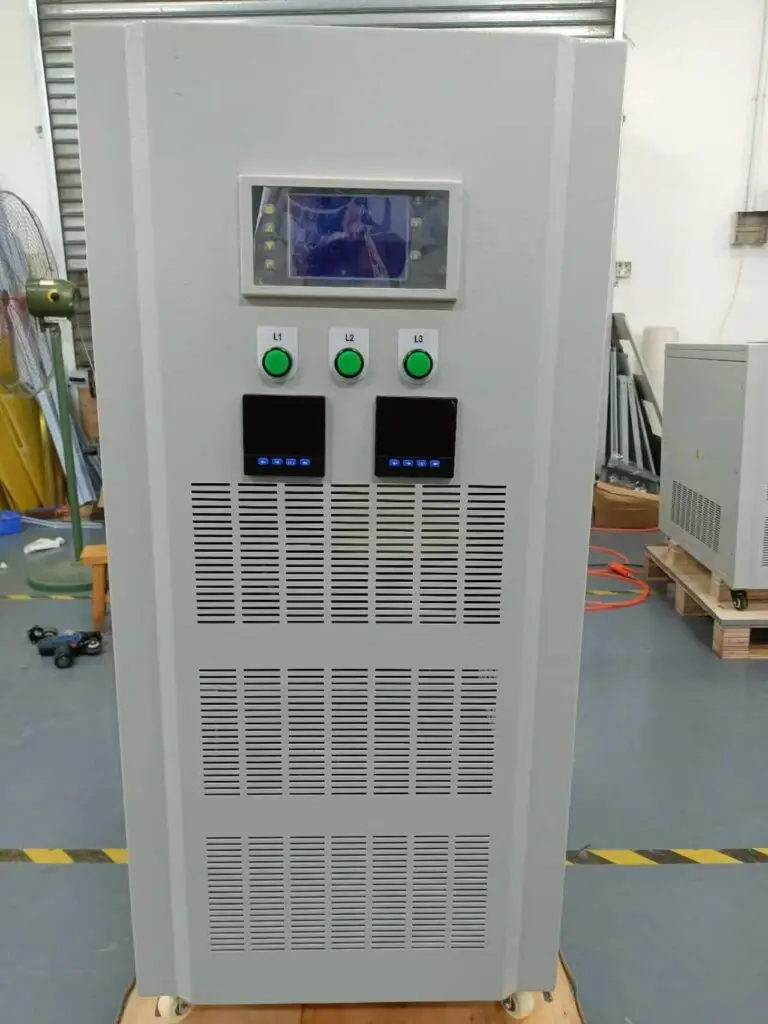
What Is a Static Voltage Stabilizer? A Complete Guide
In an era of fluctuating power supplies, protecting sensitive equipment from voltage variations is crucial. A static voltage stabilizer (SVS) is an advanced electronic device that ensures stable output voltage without mechanical parts. Unlike traditional relay-type or servo stabilizers, it uses components like IGBT, MOSFET, or SCR for rapid, precise regulation. This guide explains what a static voltage stabilizer is, its working principle, key features, advantages, applications, and why it’s a superior choice for modern needs.
Working Principle of a Static Voltage Stabilizer
Static stabilizers operate through fully electronic processes for efficient voltage control:
- Voltage Detection: A microcontroller or digital signal processor (DSP) continuously monitors input voltage fluctuations in real-time.
- Rapid Adjustment: If the input deviates from the rated value, electronic power devices correct it using PWM (Pulse Width Modulation) or switching technology to add or subtract compensation voltage.
- Stable Output: The regulated voltage is filtered and delivered to the load, ensuring seamless operation for connected devices.
This method allows millisecond-level responses, far surpassing mechanical alternatives.
Key Features of Static Voltage Stabilizers
- High Precision: Output accuracy of ±0.5% or better, ideal for voltage-sensitive applications.
- Fast Response Time: Adjusts in under 10ms to handle transients effectively.
- No Mechanical Parts: Eliminates wear, enhancing reliability and lifespan.
- Versatile Protection: Manages overvoltage, undervoltage, spikes, and more.
- High Efficiency: Up to 95% or higher, minimizing energy losses.
- Compact Design: Lightweight and space-saving compared to older models.
Advantages of Static Voltage Stabilizers
Static stabilizers outperform traditional options in several ways:
- Superior Stability: Perfect for high-precision equipment in medical, communication, and industrial settings.
- Extended Lifespan: Minimal maintenance due to electronic design.
- Adaptability: Thrives in harsh environments with frequent voltage swings.
- Energy Savings: High efficiency reduces operational costs.
Compared to servo or relay-type stabilizers, static models offer faster speeds, higher accuracy, and longer service life.
Applications of Static Voltage Stabilizers
These devices are essential in various sectors:
- Medical Field: Stabilizes power for CT scanners, MRI machines, and X-ray equipment.
- Communications: Ensures reliable operation in base stations, servers, and data centers.
- Industry: Supports CNC machines, semiconductor production, and automation systems.
- High-End Consumer Use: Powers laboratory instruments, audio/video systems, and precision tools.
Conclusion
A static voltage stabilizer is a high-performance, electronic solution for voltage regulation, representing an upgrade from outdated relay or servo types. It’s indispensable for modern industrial and commercial setups requiring unwavering power stability. By understanding these devices, you can better protect your equipment and ensure optimal performance in voltage-challenged environments.