
Understanding Static Transfer Switches: Ensuring Uninterrupted Power for Critical Systems
At ShengweiUPS, we specialize in handling high-demand power systems that require seamless operation and protection against interruptions. When a primary power source fails, immediate backup activation is crucial to prevent damage to sensitive equipment and circuits. Our advanced transfer switches provide robust safeguards for your infrastructure. In this guide, we’ll explore how static transfer switches work, their key benefits, and the differences between automatic transfer switches (ATS) and static transfer switches (STS). Discover why these devices are essential for maintaining reliable power supply.
What is a Static Transfer Switch?
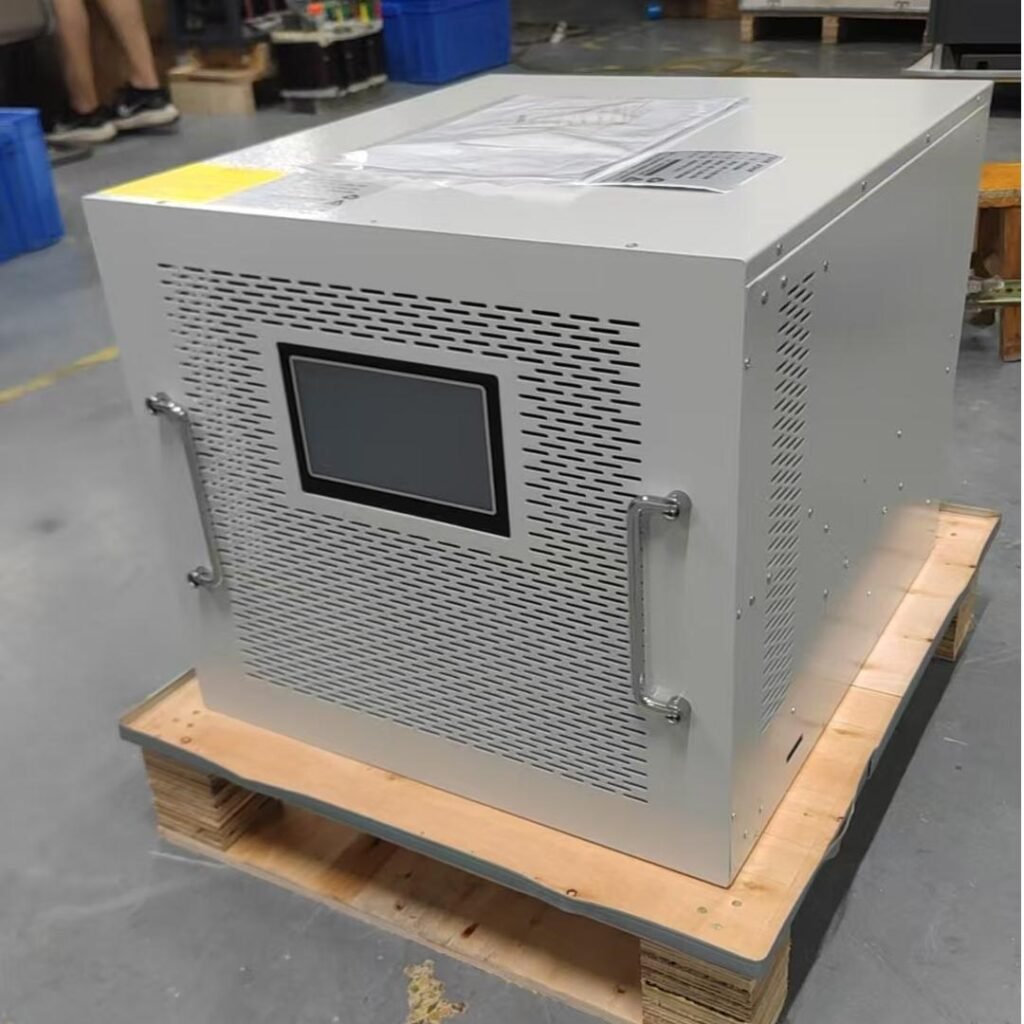
If you’re unfamiliar with static transfer switch (STS) technology, it’s helpful to start with the basics. An STS is an electrical device designed to swiftly alternate between power sources, delivering maximum uptime for mission-critical applications. It executes rapid switches, ensuring continuous power delivery without any noticeable disruption to the connected load.
Static transfer switches are increasingly standard in high-capacity power setups. They shield large-scale systems and facilities from brief power fluctuations. Most Uninterruptible Power Supply (UPS) systems incorporate an STS to instantly engage backup power, minimizing risks in demanding environments.
How Does a Static Transfer Switch Work?
The operation of a static transfer switch is straightforward yet highly effective. It continuously evaluates two power sources and automatically selects the optimal one if degradation or failure occurs in the primary feed.
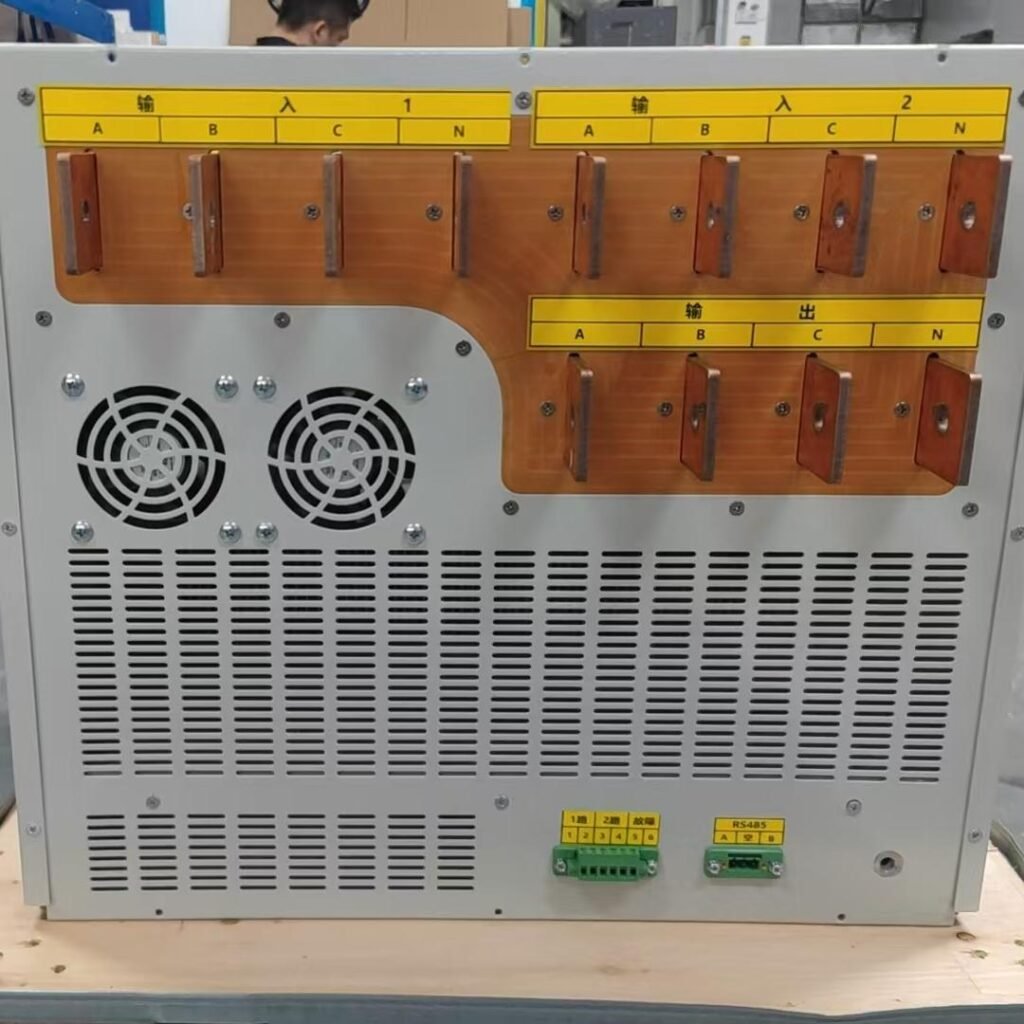
Typically, an STS includes key elements such as control and monitoring systems, silicon-controlled rectifiers (SCRs), and breaker/bus assemblies. These components enable exceptional reliability—detecting even minor power issues and switching to the backup source in milliseconds.
Unlike traditional mechanical switches, static transfer switches feature no moving parts, eliminating friction, reducing maintenance needs, and extending lifespan. This makes them a smart investment for high-stakes operations.
STS units are widely deployed in data centers, telecommunications hubs, IT networks, airport security, and other vital infrastructures worldwide. They guarantee a stable power flow, keeping operations running smoothly.
Types of Transfer Switches: ATS vs. STS
There are primarily two variants of transfer switches, each functioning similarly but with nuanced differences in control and application.
Automatic Transfer Switch (ATS)
An automatic transfer switch operates hands-free, based on predefined parameters. If a power source dips below the set threshold, the ATS seamlessly transitions to the alternative without manual intervention, ensuring automated protection.
Static Transfer Switch (STS)
In contrast, a static transfer switch offers greater flexibility, allowing operators to manually initiate a switch when needed—via a control panel or remote interface. This is ideal for scenarios requiring human oversight.
Both ATS and STS achieve transfers in under 4 milliseconds (about a quarter of an electrical cycle), far surpassing mechanical alternatives in speed and efficiency.
Key Advantages of Static Transfer Switches
Using a static transfer switch provides numerous benefits for power-sensitive environments:
- Ultra-Fast Response: Minimizes downtime and protects against voltage sags or outages.
- High Reliability: Solid-state design reduces wear, ensuring long-term performance.
- Seamless Integration with UPS: Enhances overall power redundancy in critical setups.
- Versatile Applications: Suitable for industries like data centers, healthcare, and manufacturing.
- Cost-Effective Protection: Prevents costly equipment damage and operational halts.
Compared to automatic transfer switches, STS models offer manual override capabilities, making them preferable for complex systems where operator control is valuable. While ATS excels in fully automated scenarios, STS provides a balance of automation and intervention.
Static Transfer Switches from ShengweiUPS
At ShengweiUPS, we prioritize rapid-response power solutions to safeguard your operations. Our static transfer switches deliver unparalleled power availability, defending against interruptions and ensuring redundancy.
Integrated with our UPS systems, they protect your entire facility from blackouts while enabling remote monitoring and management for your team. Invest in ShengweiUPS STS technology to elevate your power reliability.
Ready to enhance your power infrastructure? Contact our experts today to learn more about our static transfer switches and how they can benefit your setup.