
Transformer Based UPS: A Reliable Power Protection Solution
In modern power systems, uninterruptible power supplies (UPS) play a crucial role, especially in critical areas such as data centers, industrial equipment, and medical facilities. Among them, Transformer Based UPS stands out for its exceptional stability and reliability. To our UPS product catalog for more options. This article will detail the working principles, advantages, disadvantages, application scenarios of Transformer Based UPS, and compare it with transformerless UPS to help readers better understand this technology.
What is Transformer Based UPS?
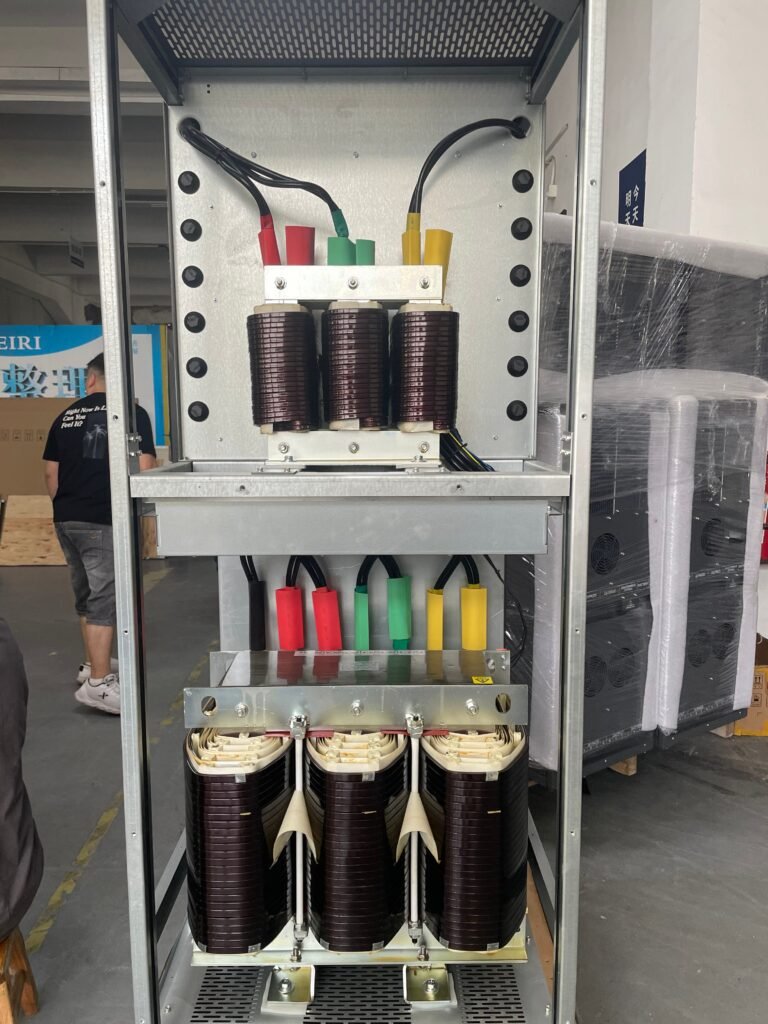
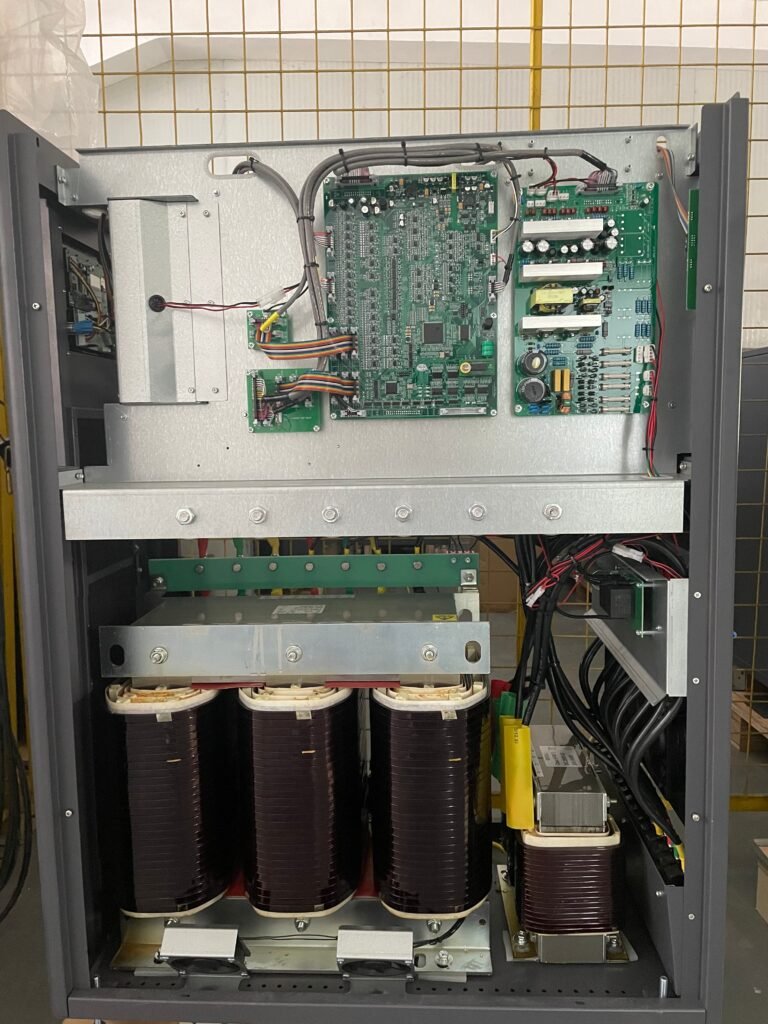
Transformer Based UPS is an uninterruptible power supply system that uses a transformer as its core component. A transformer is a static device that transfers electrical energy from one AC circuit to another through electromagnetic induction, while achieving voltage conversion and electrical isolation. – Wikipedia on electrical transformers for technical basics. In UPS systems, the transformer is typically placed at the input or output end to isolate the input power from the load, ensuring clean and stable output power. This design is particularly suitable for environments requiring high reliability, as it effectively filters power noise and fluctuations.
Unlike traditional UPS, Transformer Based UPS emphasizes electrical isolation, meaning any interference on the input side (such as surges or spikes) will not directly affect the output side, thereby protecting sensitive equipment from damage.
Working Principle of Transformer Based UPS
Transformer Based UPS typically adopts an online or double-conversion architecture. Its basic workflow is as follows:
- Input Stage: Utility power input is first converted to DC through a rectifier, while charging the battery pack.
- Transformer Isolation: The transformer plays a key role here by isolating the input and output circuits, preventing noise, harmonics, and transient voltages from passing through. – IEEE standards on power isolation for in-depth specs
- Inverter Stage: DC is converted back to stable AC output for the load via an inverter.
- Backup Mode: When utility power fails, the system seamlessly switches to battery power, continuing to supply electricity through the transformer and inverter.
This design ensures zero interruption switchover time (usually less than 1 ms) and provides high-quality sine wave output, suitable for applications with stringent power quality requirements.
Advantages of Transformer Based UPS
Transformer Based UPS excels in several aspects:
- High Stability and Reliability: The transformer provides electrical isolation, effectively resisting power surges, spikes, and noise to protect equipment from damage. It offers higher overload capacity and impact resistance, ideal for high-load environments.- To our customer case studies on reliability
- Fewer Failure Points: Compared to other designs, Transformer Based UPS is more robust with a lower failure rate, performing exceptionally well in industrial settings.
- High Power Protection: Especially in specific configurations (such as input/output isolation), it delivers superior protection levels for mission-critical systems.- Schneider Electric’s UPS resources for industry examples
- High Capacity and Availability: It excels at handling large-capacity loads and simplifies external and internal fault isolation.
These advantages make it the preferred choice for applications requiring long-term stable operation.
Disadvantages of Transformer Based UPS
Despite its many advantages, Transformer Based UPS also has some limitations:
- Larger Size and Weight: The inclusion of a transformer makes the device heavier and bulkier, unsuitable for space-constrained installations.
- Lower Efficiency: Compared to transformerless designs, its energy conversion efficiency may be slightly lower, leading to higher operating costs.
- Higher Cost: Manufacturing and maintenance expenses are more expensive, particularly in initial investments.
- Heat Generation: The transformer produces more heat during operation, requiring better cooling systems.
These drawbacks may pose challenges in applications prioritizing compactness and efficiency.
Comparison with Transformerless UPS
Transformerless UPS is another popular design that omits the transformer and uses electronic components for isolation and conversion. Here’s a comparison between the two:
| Aspect | Transformer Based UPS | Transformerless UPS |
|---|---|---|
| Reliability | High, more robust, suitable for industrial applications | Lower, with more failure points |
| Efficiency | Lower (about 90-95%) | Higher (up to 98%) |
| Size/Weight | Larger and heavier | Smaller and lighter |
| Cost | Higher | Lower |
| Isolation Protection | Excellent, strong electrical isolation | Relies on electronic isolation, weaker |
| Applications | High-load, critical systems | Data centers, office environments |
Overall, Transformer Based UPS outperforms in robustness and protection, while Transformerless UPS focuses more on efficiency and cost control.
Application Scenarios for Transformer Based UPS
Transformer Based UPS is widely used in areas requiring high reliability:
- Industrial Manufacturing: Protects heavy equipment from power fluctuations, such as machine tools and production lines.- Eaton’s industrial UPS case studies
- Data Centers: Ensures uninterrupted server operation to prevent data loss.
- Medical Facilities: Provides stable power for life-support systems, like operating room equipment.
- Telecommunications and Finance: Offers isolation protection in high-security environments.
- High-Inductive Loads: Such as motors or inductive loads, where the transformer effectively handles transient currents.
In these scenarios, its high availability and fault isolation capabilities are particularly valuable.
Conclusion
Transformer Based UPS, with its outstanding stability and protection performance, is a reliable choice in the field of power backup. Although it may not match transformerless designs in efficiency and cost, it is irreplaceable for industrial and critical applications. As power demands grow, selecting the right UPS type depends on specific needs: if robustness and isolation are prioritized, Transformer Based UPS is the ideal solution. It is recommended to consult professional suppliers based on actual loads and environments for optimal configuration. Contact us for a free consultation